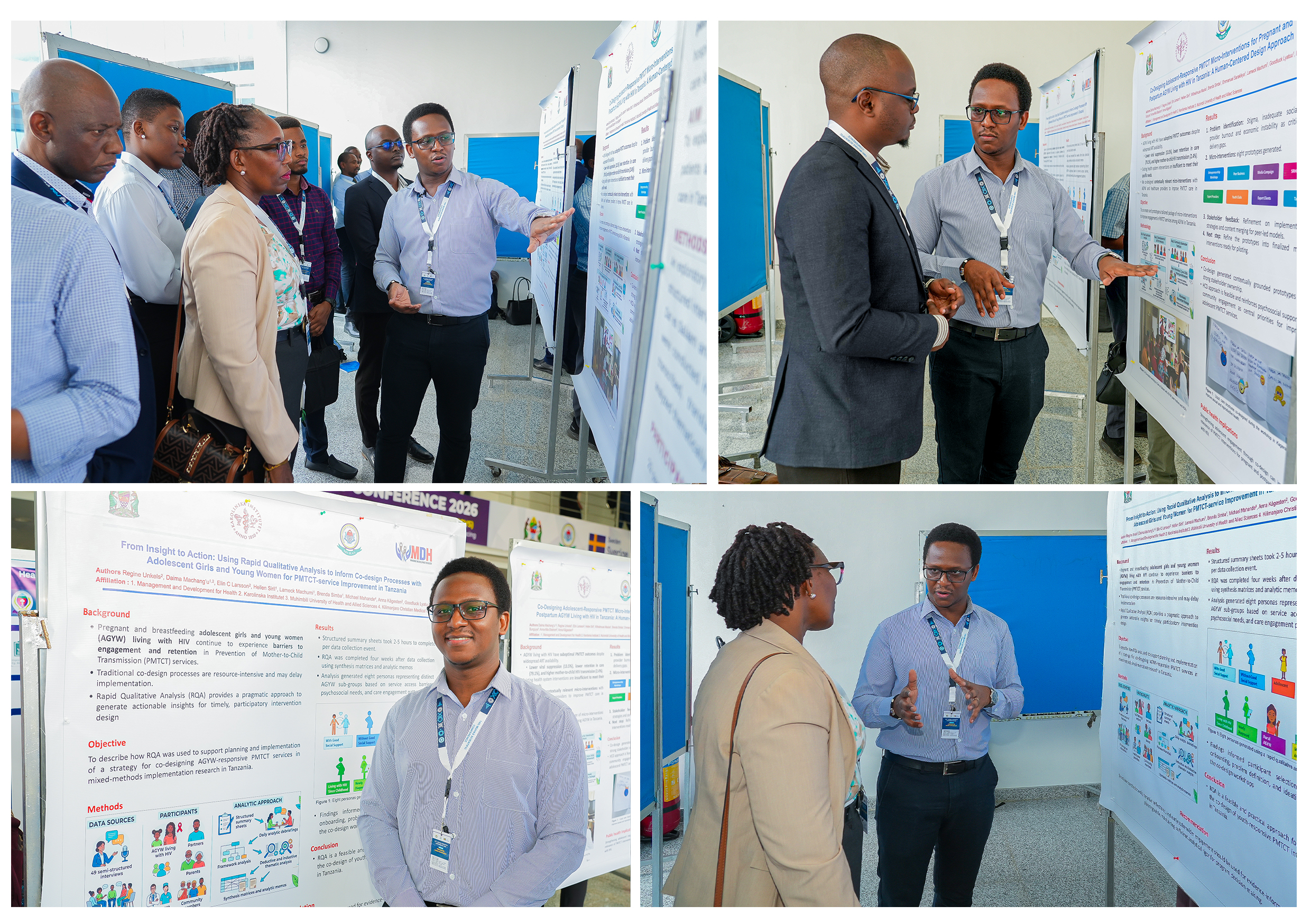
Management and Development for Health (MDH) engaged with researchers, policymakers, healthcare professionals, development partners, and academics at the 14th Muhimbili University of Health and Allied Sciences (MUHAS) Scientific Conference, held from July 1–3, 2026, at the Mloganzila Campus. The conference was convened under the theme, "Innovating for Resilient and Sustainable Universal Health Coverage in the Era of Shifting Global Health Financing," providing a national platform for advancing research, innovation, and collaboration in strengthening Tanzania's health system.
Throughout the three-day conference, the MDH delegation participated in a broad range of scientific sessions, technical discussions, and networking opportunities focused on innovative approaches to improving health systems, enhancing service delivery, and achieving sustainable Universal Health Coverage. The conference brought together lecturers, professors, researchers, students from higher learning institutions, government representatives, and development partners to exchange evidence and practical solutions for addressing current and emerging public health challenges.
As part of its commitment to translating research into impactful health interventions, MDH contributed two scientific presentations led by Dr. Daima A. Machang'u, highlighting preliminary findings from the ENGAGE research project. The ENGAGE investigates innovative approaches to strengthening services for HIV treatment and prevention of HIV infection to babies of pregnant and postpartum adolescent girls and young women (AGYW) living with HIV (also known as PMTCT services). The ENGAGE is implemented jointly by Karolinska Institutet of Sweden, led by Prof. Anna Kågesten, and MDH, led by Dr. Goodluck Lyatuu, and engages collaborators from Muhimbili University, Ministry of Health, Prime Minister’s Office regional authorities and local government and regional health management teams of three regions.
In the first presentation, "From Insight to Action: Using Rapid Qualitative Analysis to Inform Co-design Processes with Adolescent Girls and Young Women for PMTCT Service Improvement in Tanzania," Dr. Machang'u demonstrated how rapid qualitative analysis can generate timely and actionable evidence to support participatory intervention design while maintaining methodological rigour. The study highlighted the persistent barriers that pregnant and breastfeeding AGYW living with HIV face in accessing and remaining in PMTCT services and illustrated how evidence-driven approaches can inform responsive programme improvements. The presentation was featured among the conference's scientific poster presentations.
Dr. Machang'u also presented "Co-Designing Adolescent-Responsive PMTCT Micro-Interventions for Pregnant and Postpartum AGYW Living with HIV in Tanzania: A Human-Centred Design Approach." The study showcased how engaging adolescent girls and young women, healthcare providers, and community stakeholders throughout the design process leads to practical, context-specific interventions that strengthen PMTCT services. Findings demonstrated that a Human-Centred Design approach is both feasible and effective in fostering stakeholder ownership while emphasising the critical role of psychosocial and community-based support in improving health outcomes for pregnant and postpartum AGYW living with HIV. The study recommends expanding adolescent engagement through co-design to ensure PMTCT interventions remain relevant, responsive, and impactful.
MDH's participation reflects the organisation's continued investment in implementation science, operational research, and evidence-informed programming to improve the quality of healthcare services in Tanzania. By sharing research findings and engaging with leading scientists, policymakers, and development partners, MDH continues to contribute to national efforts to strengthen health systems, promote innovation, and accelerate progress towards resilient, sustainable, and people-centred healthcare.
The conference reinforced the importance of collaboration between academic institutions, government, implementing partners, and communities in generating evidence that informs policy and practice. Through its ongoing research and technical leadership, MDH remains committed to transforming evidence into action and delivering innovative solutions that improve the health and well-being of Tanzanians.