
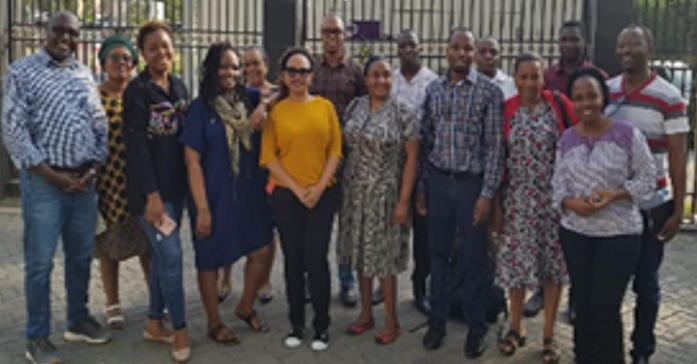
About the Project
The Genotype-Informed Versus Empiric Management Of VirEmia (GIVE MOVE) Is the randomised open labelled randomized clinical trial that assesses the clinical impact and cost-effectiveness of genotypic resistance testing of HIV to inform clinical management in HIV-positive children and adolescents whose treatment is failing to control the virus. Genotypic drug resistance testing, a reliable but relatively costly and complex diagnostic tool to detect viral drug resistance, is routinely used in high-income settings but access is extremely limited in most areas that have the highest burden of HIV, notably sub-Saharan Africa. This research project aimed to assess if routine, early resistance testing yields a clinical benefit for children and adolescents living with HIV in resource-limited settings in Southern and East Africa (Lesotho and Tanzania); Lesotho and Tanzania have an adult prevelance of HIV of 23.6% (the second-highest worldwide) and 4.6%, respectively[1][1], with 21,000 children and adolescents living with HIV in Lesotho and 150,000 in Tanzania[2][2] (UNICEF 2019) therefore inclusion of both settings implies external validity of findings for the similar resource-limited African settings.The GIVE MOVE trial is funded primarily by Fondation Botnar with additional funding from the Swiss National Science Foundation.
Scope of Work
The purpose of GIVE MOVE trial was to assess the influence of genotypic resistance testing on clinical decision making and its impact on the health of children and adolescents with unsuppressed HIV-1.
The study was done in two Sub-Saharan African countries Tanzania (St Francis Referral Hospital in Ifakara and three high volume Care and Treatment Clinics under Management and Development for Health - MDH support (Temeke Regional Referral Hospital, Mbagala Rangi Tatu Hospital and Upendano Dispensary) in Temeke District, Dar es Salaam region and Lesotho (three Baylor clinics in Hlotse, Butha-Buthe, and Mokhotlong).
Ø Primary objective: To assess if GRT-based management of viremia in CALHIV on ART in resource-limited settings improves overall health outcomes. The results of this trial are intended to inform future WHO and national guidelines on the use of GRT in CALHIV.
Ø Secondary objectives: To assess the impact of GRT-based management of viremia in CALHIV on various individual health outcomes including mortality, morbidity, and virologic status.
Exploratory objectives: To assess the dynamics of viral re-suppression and the viral development of drug resistance without vs with GRT-based management of viremia.
Key Figures
Other Projects
NDOVU Cohort Study
Ndovu is a multi-country prospective cohort study funded by the Gates Foundation, which in Tanzania, is implem...
View project
Afya Jumuishi Project
A five-year initiative providing comprehensive HIV and TB prevention, care and treatment services.
View project
ENGAGE Project
Is a four-year research project to improve health outcomes among adolescent girls and young women (AGYW) livin...
View project